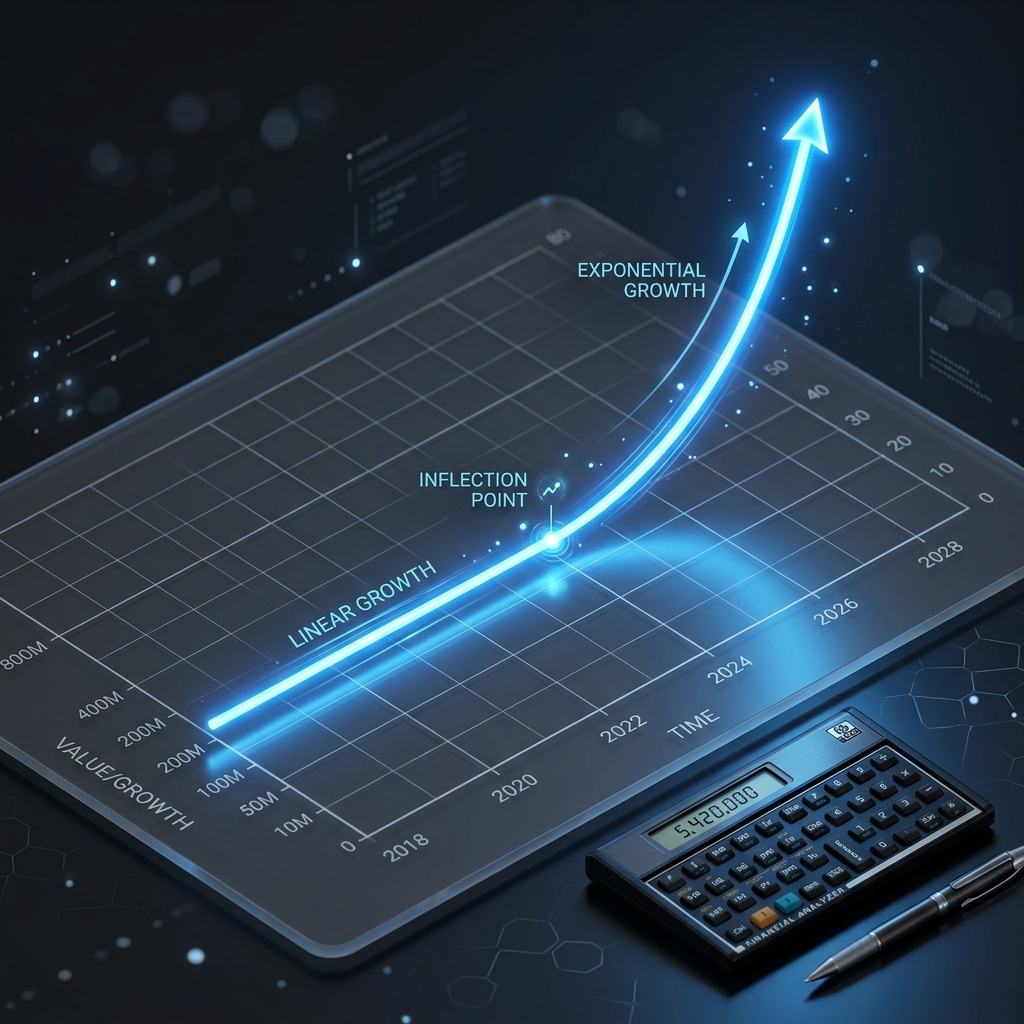
The greatest mathematical force in the universe isn't found in a laboratory or a particle accelerator; it's found in your brokerage account. Albert Einstein famously called compound interest the "eighth wonder of the world," and for a very specific reason: it is the only legal way to turn time directly into money through geometric progression.
The Math Behind the Snowball
Compound interest differs from simple interest because it is interest calculated on the initial principal, which also includes all of the accumulated interest from previous periods on a deposit or loan. This creates a feedback loop where your money earns money, and then that new money earns even more money.
The standard formula for compound interest is:
Where:
- A = the future value of the investment
- P = the principal investment amount
- r = the annual interest rate (decimal)
- n = the number of times that interest is compounded per unit t
- t = the time the money is invested for
The Rule of 72: A Quick Mental Shortcut
If you want to know how long it will take for your money to double at a given interest rate, use the Rule of 72. Simply divide 72 by your annual rate of return. For example, at a 7% return (the historical average for the stock market after inflation), your money doubles every 10.2 years.
How $500 Becomes $1,000,000
Building a million-dollar portfolio starting with $500 is entirely possible, provided you have two things: consistency and time. If you start with $500 and contribute $500 every month at a 10% annual return, you hit the millionaire mark in approximately 31 years.
The "inflection point" usually occurs around year 15. This is when your annual interest earnings begin to exceed your annual contributions. From this point forward, your portfolio is doing more work than you are.
Inflation-Adjusted Returns
It's important to calculate your "Real Rate of Return." If the market returns 10% but inflation is 3%, your purchasing power is only growing at 7%. Always use inflation-adjusted figures when planning for retirement to ensure your future million dollars still buys what a million dollars buys today.